Magnetism and Human Health
The absence of magnetism on Earth would mean the end of life on our beautiful planet.
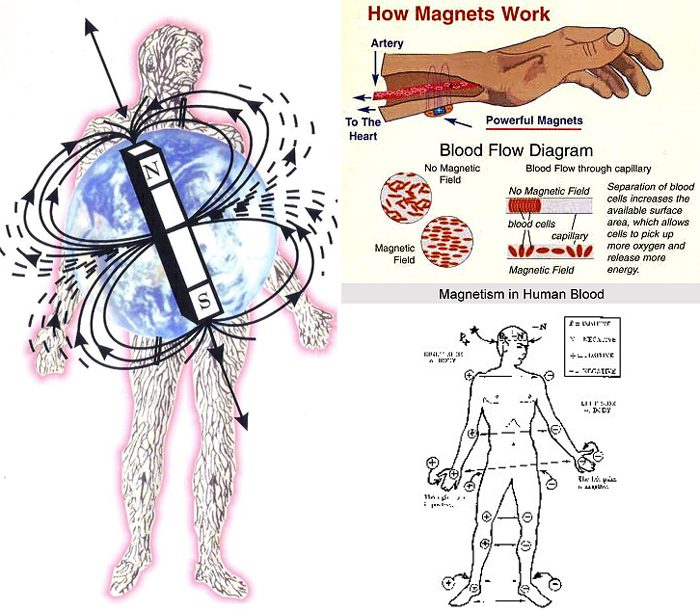
Our world is surrounded by magnetic fields. The Earth's magnetic field is generated by the rotation of molten, largely iron-rich material at its core. The field's intensity varies, being stronger at the poles and weaker at the equator, with magnetic lines of force travelling from one pole to the other. On the other hand, our own bodies also generate subtle magnetic fields resulting from chemical reactions between cells and ionic currents within the nervous system. We require both external and internal sources of magnetic fields to thrive: the magnetism of Mother Earth and our own.
The Earth's magnetic field has weakened considerably over the past 500 years, by as much as 50%, and today at our latitude it measures around 0.5 gauss (a unit of magnetic field strength). Geophysicists attribute this to potential polar shifts and extensive iron ore mining. The weakening of the Earth's magnetic field has been linked to various non-specific symptoms, such as aches in the shoulders, spine, and joints. People frequently report fatigue, exhaustion, headaches, dizziness, sleeplessness, chest discomfort, lowered immunity, circulatory and digestive issues, osteoporosis, and the onset of various degenerative conditions.
The beneficial effects of magnetic fields on our bodies are often explained by the way the natural frequencies of the Earth and its waters correspond to the frequencies of our brain, bones, and bodily fluids, measuring around 10 Hz. The overall influence of a magnetic field is felt at a molecular level, gently supporting the nervous, endocrine, and immune systems.
Magnetic therapy is not a modern method; it has a long history and was known in the ancient cultures of China, Egypt, and Greece. Legend has it that Cleopatra slept on hematite, a natural magnet, to ease frequent headaches. Between the 16th and 19th centuries, it was explored by William Gilbert, Paracelsus, Mesmer, Samuel Hahnemann, and Faraday. In modern times, Japanese researcher Dr Kyoichi Nakagawa, after 20 years of research, was the first to describe magnetic field deficiency syndrome, linking various health complaints directly to the decline in the Earth's natural magnetism.
Magnetic therapy is a gentle, non-invasive method widely used to support chronic conditions, applied both for preventive care and for therapeutic and rehabilitative support.
Magnets are traditionally used to support:
- Cardiovascular health, high blood pressure, angina, venous and peripheral circulation, and vascular tone
- Respiratory wellbeing, obstructive bronchitis, bronchial asthma, and recovery from chest infections
- Head-related tension (migraines, headaches), encouraging better sleep, memory, and energy levels
- The digestive tract, supporting digestion, bowel regularity, stomach ulcers, and constipation
- Traumatology and orthopaedics, assisting recovery from bone, joint, and muscle injuries, tendon inflammation, cervical syndrome, disc issues, and rheumatic discomfort.
Magnetic therapy works by helping to balance blood pH, supporting natural alkalinity through improved circulation and tissue oxygenation. It encourages the optimal function of melatonin and endorphins, helps neutralise free radicals, and discourages inflammatory processes and microbial growth. In application, the north magnetic pole is typically used, or a greater therapeutic effect is created by alternating between the north and south magnetic fields.
In daily life, it is also beneficial to drink magnetically structured water, where molecules form trimers (clusters of three water molecules) rather than bulky groupings. This promotes better conductivity and hydration, assists cellular communication, binds with specific DNA segments, and helps ionise calcium to direct it towards the bones, supporting bone density. This wellness elixir, comparable to pure spring water, provides vital hydration that is readily absorbed and utilised by the body.
This article is for general information and is not a substitute for medical advice. If you have health concerns, consult a doctor before a treatment.